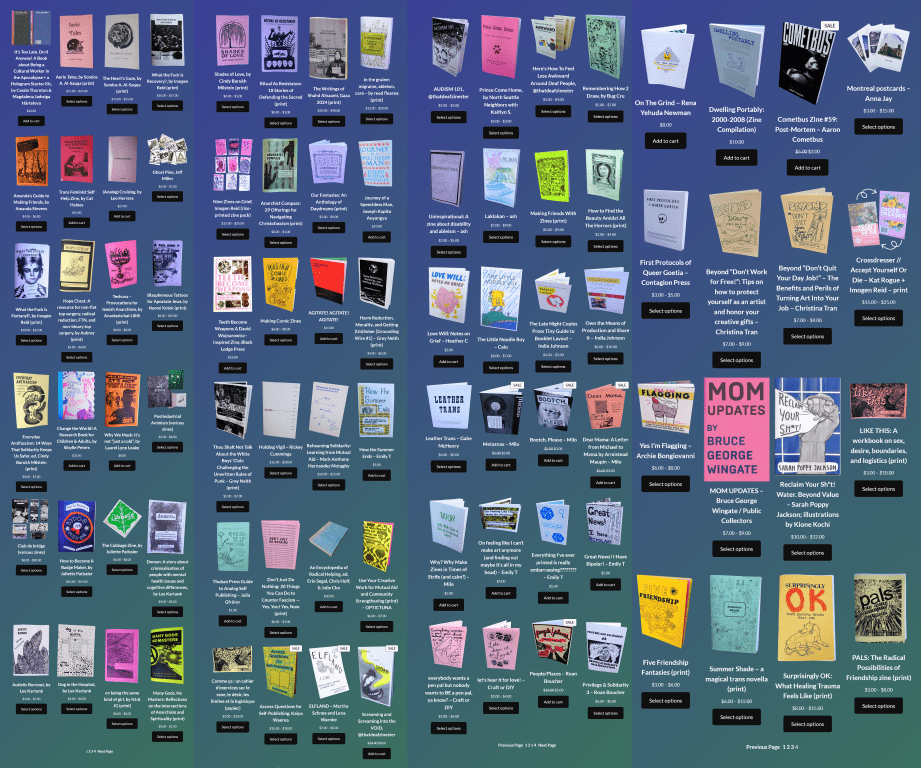
- Print and digital zines that I (Lee, the sole person running this operation) wrote and published
- Print and digital zines that other people wrote, and that Sheer Spite edits, designs, publishes, and distributes
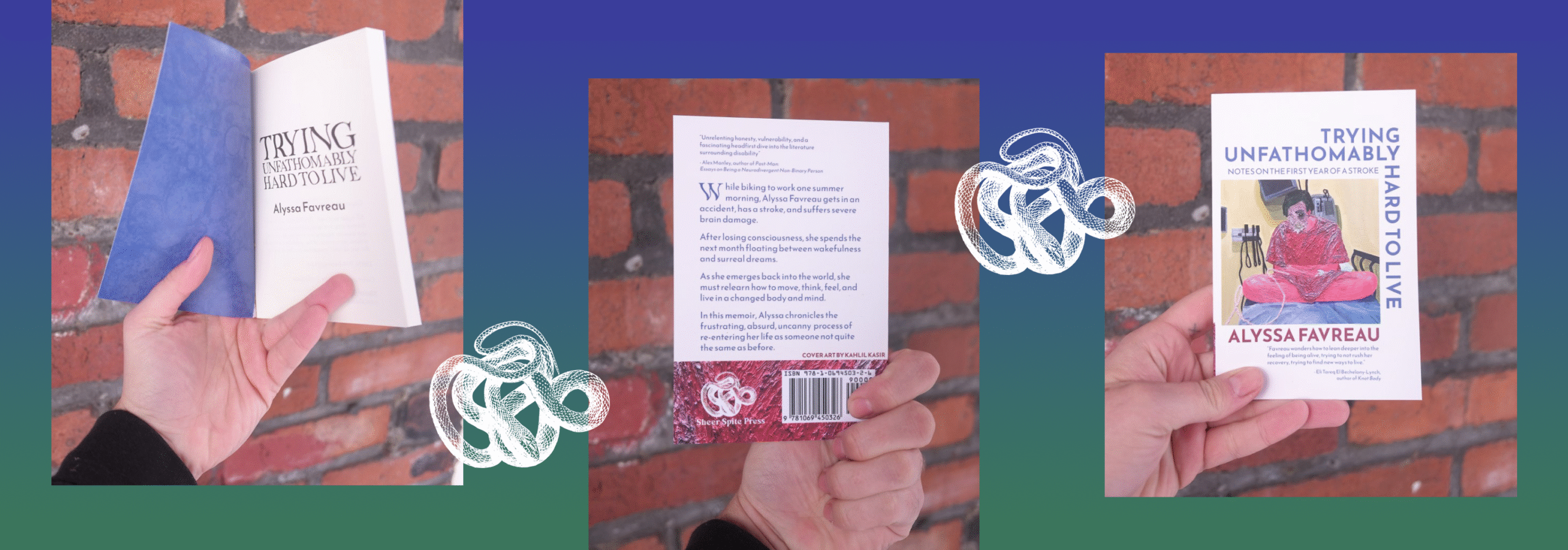
- Print and digital books that other people wrote and Sheer Spite edits, designs, publishes, and distributes
- Print zines and books purchased wholesale to resell. Authors are paid upfront for these.
- Print zines that are written and designed by their authors, printed and assembled by Sheer Spite, and for which the author receives a royalty for copies sold
- Digital zines that are written and designed by their authors and for which the author receives a royalty for copies sold
That’s kind of crazy, right? It’s a bit much? Hard to understand?
- I also sell some (but not all) of these things wholesale to stores.
- As of very recently I also sell some (but not all) of these things on our new US store.
Not gonna lie, compiling this list kind of made my head spin. I’ve had submissions closed for a while for both original work to publish, and already-made work to distro, because I didn’t have any energy/time/capacity, and also because I’d been wanting to rethink and hopefully streamline what I offer. I want to be clear, transparent, and premeditated in the deal I can offer to people whose work I’m helping share. This is a work in progress.
Coming up on two years old, Sheer Spite is still kind of in the “throwing spaghetti at the wall to see what sticks” phase, and what sticks will be things:
- that are pleasant and sustainable for me to do
- that I think are fair to offer authors, not sketchy or exploitative
- that make a little bit of money, or at least don’t lose money
I’m still figuring out what that will look like, to be honest. As you saw in my last post about sliding scale pricing, I’ve been working on compiling more data about the press’ operations to help me get a clearer picture of where money goes and comes from, when it comes to things I distro vs. things I publish, sales at events vs. online sales, etc. etc., and can figure out how to assess and balance that against how much fun each component is and how much work it is.
The reason I started Sheer Spite as a combination small press and distro was:
- I wanted to start a press, but since I am one person doing this off of the side of my desk, I knew I wouldn’t be able to put work out very quickly. It seemed sad to have an online store offering one (1) book for like the first year.
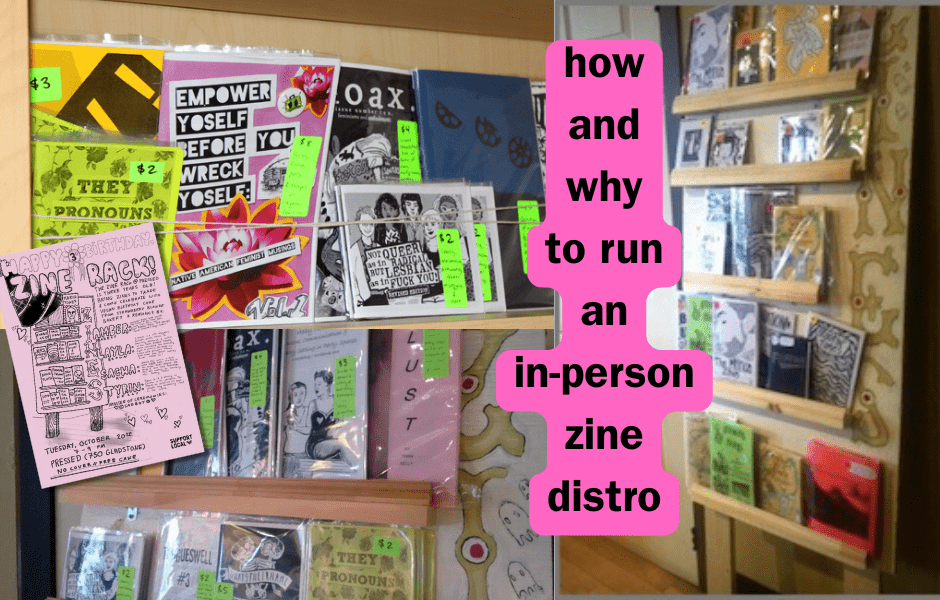
- I’d already run a zine distro before (in-person at various locations in Ottawa; I plan to write about this here sometime).
- I know a lot of people making amazing work, far more than I’ll ever be able to support as a publisher, and not everyone needs or wants a publisher, especially within the realm of zines.
I do love to be like “wow that’s such a cool zine/book, could I grab some wholesale copies?” as a way of supporting and boosting other people’s work, but ultimately I’ll probably start moving away from selling things I distro but didn’t publish and towards focusing on original work published by Sheer Spite, once the press has enough of a backlist to make that work. I want to be able to give the things I publish the care and attention they deserve.
Sometimes I look at a publisher that does One Gorgeous Streamlined Thing and it looks so nice to me.
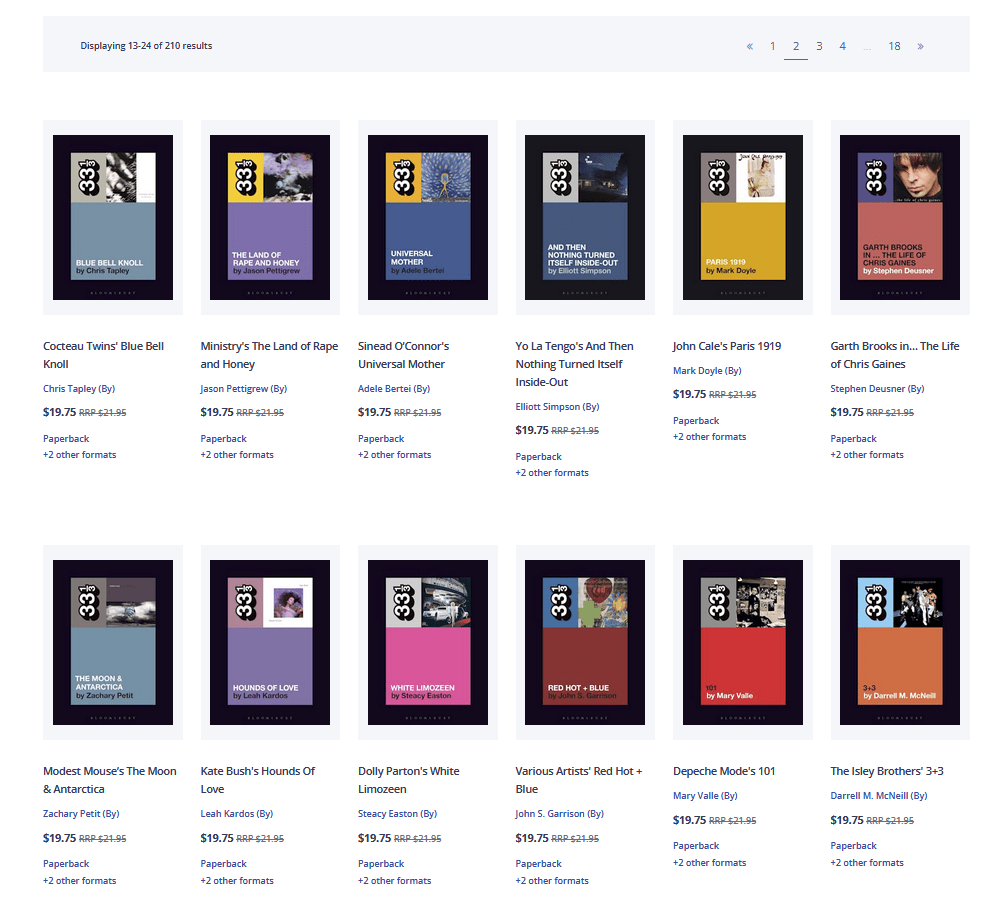
Wouldn’t it be satisfying to put out something that looks like the 33 1/3 books, so tidy and uniform? (They’re published by Bloomsbury, which presumably makes most of its money on publishing some wizard books by an individual some might call one of our era’s greatest hatemongers) but look, so pretty:
There are also many people doing similarly beautiful, tidy things on a smaller scale, like the Ley Lines series (co-published by Grindstone Comics, run by L. Nichols, and Czap Books, supported by Koyama Press):
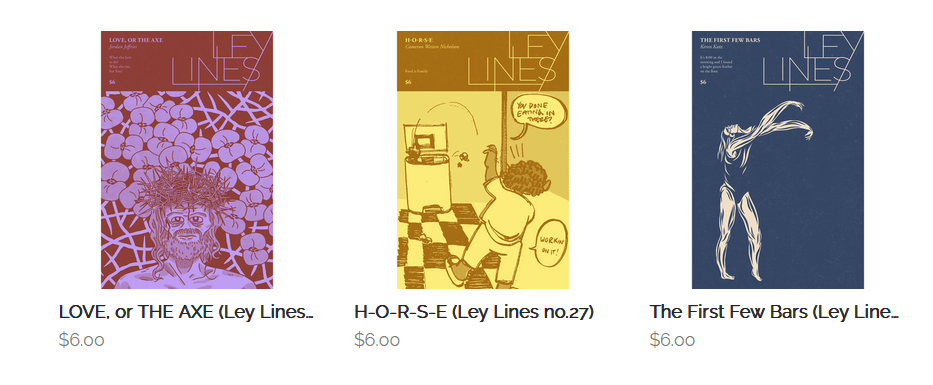
Or the Papercuts Library, by writer and conceptual artist, Joey Sellers:
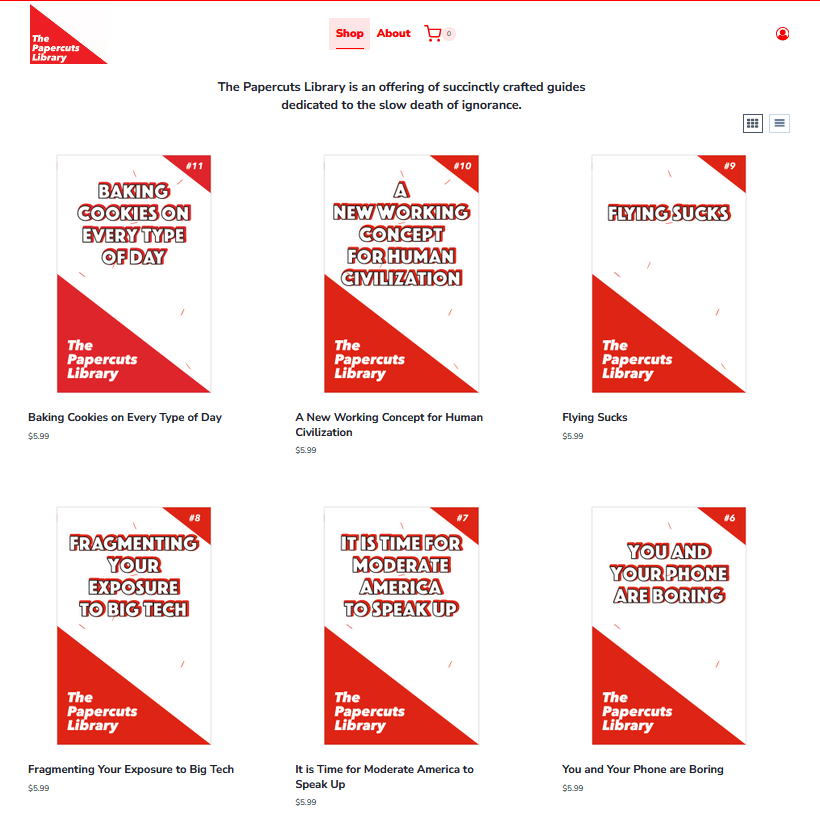
Or the lowercase pamphlets series (sad I didn’t grab any of these before their hiatus!), which are/were curated by carla bergman and chris time steele, graphics and layout design by Maia Anstey and carla bergman, with support by Jamie Leigh Gonzales, and printed at Listening House):
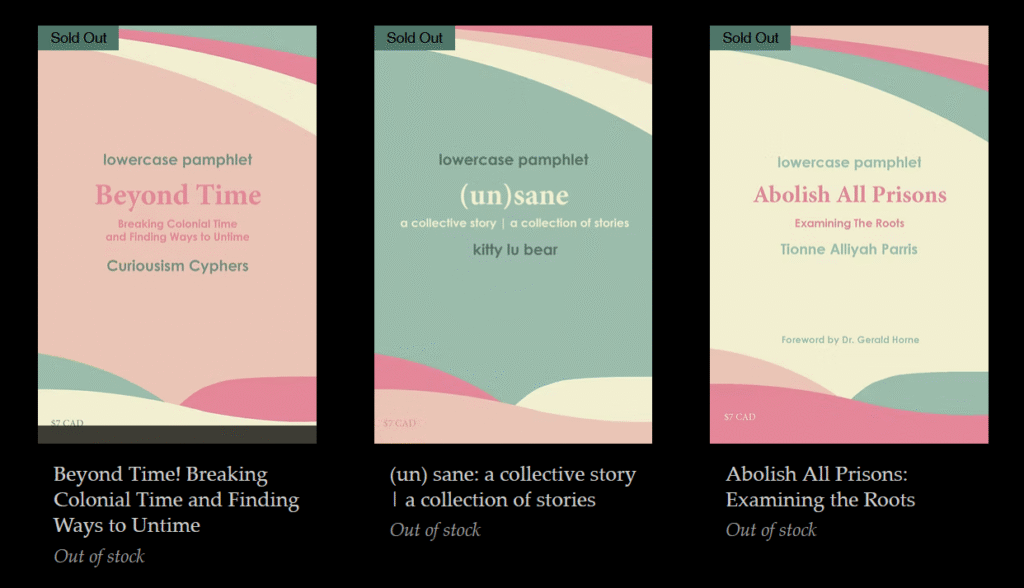
When I look at these beautiful, tidy collections I feel some light despair at my horde of unruly offerings, which are all totally disparate in form, format, style, and the type of business arrangement I have with their authors.
I do also feel like there’s something to be said for having a capacious container to fuck around in, at least as Sheer Spite is starting out. And likewise maybe there is resiliency in doing a bunch of things at least, again, as I figure out what works. Maybe it would have been worse to do One Streamlined Thing but then figure out that it totally doesn’t work or I hate doing it?
things I want to try:
- paying someone who knows about running this kind of operation who can sit down with me and help me figure out how to make it be sustainable, pleasant, and maybe someday even pay me a tiny bit for my work
- get more on my grant-writing game
- for instance, maybe get funded for a project on how to make a micropress sustainable: talk to other people who run a micropress, talk to authors about what’s important to them, compile findings into a zine to share, and also use them to inform my own thinking about Sheer Spite
Writing about publishing I’ve enjoyed lately
- “Making (Book)Ends Meet: Making Artist Books in Florida“, by Paul Shortt in Burnaway
“One metric I use for success is breaking even on a book within a year, but money isn’t the only factor. Did the book lead to friendships, wholesale orders, or distribution? Did it advance my art practice or skill set in a new way? And most importantly, did the book find an audience?”
- I also loved Shortt Editions’ How To Art Book Fair!
- “Yes, you can still launch an indie press…and you can even do it without connections or cash“, by Aaron Kent in The Bookseller:
“You can apply for grants in the hope that you can cover some of your printing costs, pay advances to authors and put a marketing scheme in place. However, the publishers who are most likely to get that cash are the ones who already have enough money to pay people to write bids that will get them more money. Don’t be surprised if you apply for a grant only to find it has been awarded to the same publishers it has always been awarded to, or to publishers who have already received two or three different grants. You may see the pot as something to be shared, but not everybody does. The way to counteract this is to run the press in the free time you have around work, family and your own creative practices. This way you can create a publishing house that doesn’t pay you a salary but does stay afloat regardless of funding rejections.”(highly relatable)