“When the pandemic first began and the world suddenly shut down, I saw promise in the ways that many people leaned into anarchistic practices. Sure, I became bleakly depressed because of the mass abandonment of so many of us by, say, capitalism, and narratives about isolation that were twisted by individualism, authoritarianism, and heteronormative ideas of kinship. I hated, for example, the use
of the phrase “social distancing” versus what we should have insisted on calling “physical distancing”; we needed each other socially — and even within our own circles, often missed the mark on creatively doing it well.
Still, as if mirroring spring’s emergence that year, mutual aid blossomed almost overnight. For instance, an epidemiologist in the city where I was sheltering in place put out word via their social media that they’d be glad to lend whatever pandemic advice they could, from their own research and knowledge, voluntarily and directly, defying the focus on the CDC, White House, and other less-than-trustworthy sources. Across Turtle Island, to point to another illustration, Mutual Aid Disaster Relief and Indigenous Mutual Aid modeled radical ethics and practices for the many liberals who’d dived into do-it-ourselves forms of reciprocity.
And self-organized forms of spiritual solidarity, virtual and outdoors in person — specifically for me, Jewish anarchist(ic) rituals of resistance and resilience — became sustenance during a time when many of us wondered whether life was worth it. Then there was the George Floyd uprising. To offer one snapshot: I saw hundreds of youths go hard in their Midwest downtown, and then, in the beautiful ruins they’d helped to create (such as boarded-up businesses now redecorated with ACAB-type graffiti), hold open-air, masked-up DIY music festivals at night, proclaiming, “This is what we fought for: to be able to share tunes and dance together — kids of all colors — in the streets of a city center that never welcomed us because of racism, classism, consumerism, and cops.”
When the state washes its hands of any and all responsibility for what it’s (purportedly) supposed to do, people in turn, as we anarchists tend to assert, know precisely what to do. They find each other and make do out of seemingly almost nothing, recognizing that they’ve had the power to self-organize and be there for each other all along. The “sweetest-smelling” of the early pandemic “spring flowers” was not merely the slogan but instead the direct actions of “we are all we have, we are all we need” — alas, until the scorching sun of so-called normality returned, and as my friend Kit Blamire observes below, “the fog of mass forgetting” soon cast a cloud over communal care.
From a grumpy anarchist perspective, it’s disturbing, to say the least, how that fog has blanketed too many within our own spheres. We anarchists, cultivators of the beautiful idea, should know and do better — far better. Sadly, that so many anarchists have “moved on” has been a profound source of sorrow and rage among those of their fellows — such as the voices within this zine — who still aspire to practice “well-being from below.” Moreover, when COVID-19 first hit, we could and should have been far more imaginative in terms of filling the statist vacuum; such a missed opportunity still eats away at my heart, including in terms of how that gap allowed fascists to leap in, leveraging the pandemic to their own deadly ends.
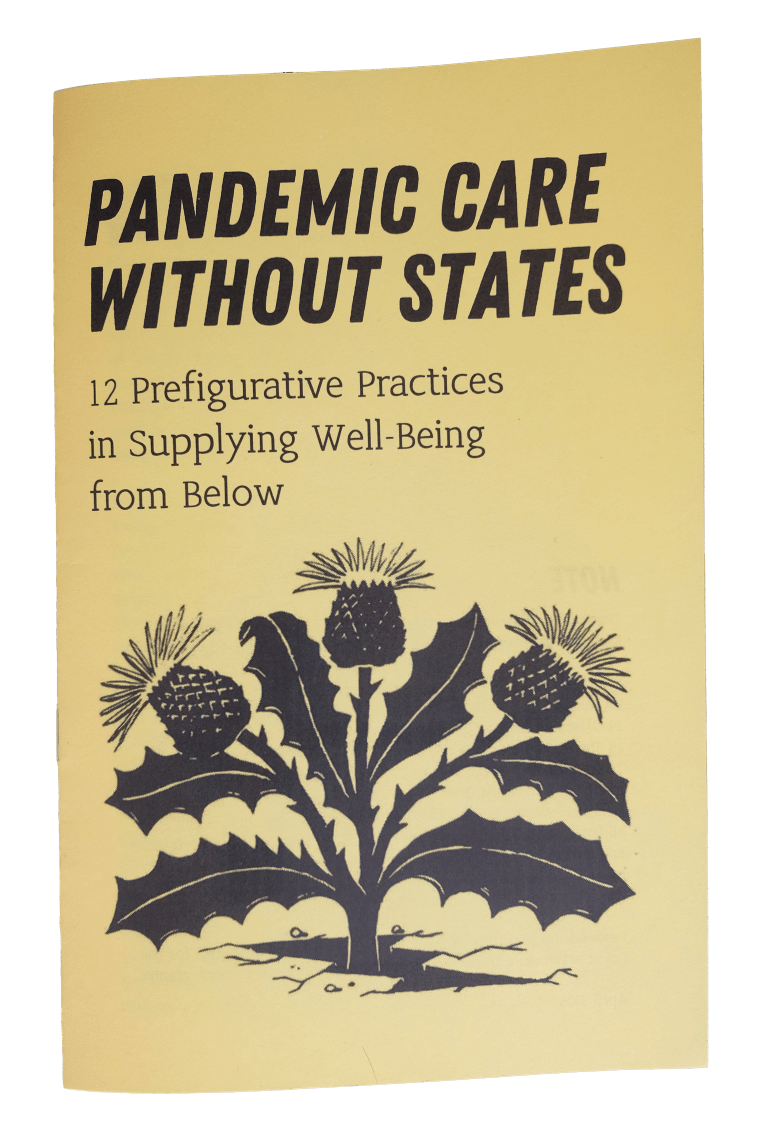
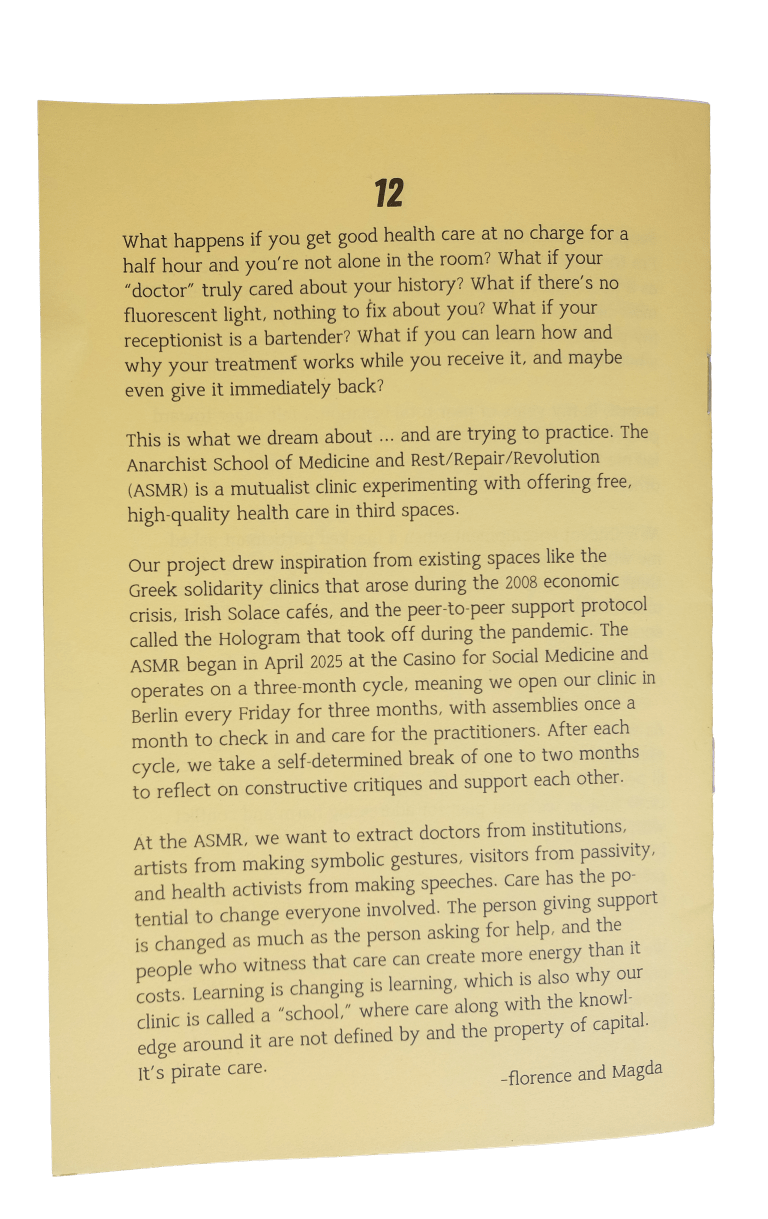
Yet from an affable anarchist stance — my belief in always illuminating our messy beautiful experiments, meaning what we actually do well, day in and day out — this zine supplies varied glimpses of how anarchists did and are still trying to embody, even if modestly, “pandemic care without states.” The stories spotlight the ways that some anarchists took up the challenge and ran with it, never forgetting — indeed, instead remembering — that love and solidarity are verbs, and our task is to dream up and enact liberatory visions, even if hard or inconvenient.”
This is for a print copy sent to you in the mail, a free digital version is available here.